but because schedule is packed
Shit Punk Says
Oceans of Wisdom
19,158
matching drops
#1459158
2026-09-22 15:17
not because I want to
going to be a bit more quiet until then
on a business trip until Sunday
we will see
but somehow different
there are a couple of things floating
is that "showing" is much better than "telling" ;)
all that is happening now
there is an actual concept we are trying to achieve
there is more to come
here it is
to show the new interface
just doing a test
**EVERYONE - DO A HARD REFRESH (SHIFT-REFRESH) for better updating**
i will come back
never mind waiting for the merge to merge
and see if we are in the future of the metaverse or what
let's chat
@[simo] you there?
ok time to check if we are real-time real-time now
just wondering if that line should continue
when scrolling up @[simo] I think the delay is just long enough that you are not sure if it is working. Two options:
a) add a fast loading indicator
b) or just preload the next screen in any case to always have one more screen ready and available to display with no delay
true @[Tharwin]
@[simo] some very mild flickering as I type to the image at the top of the screen
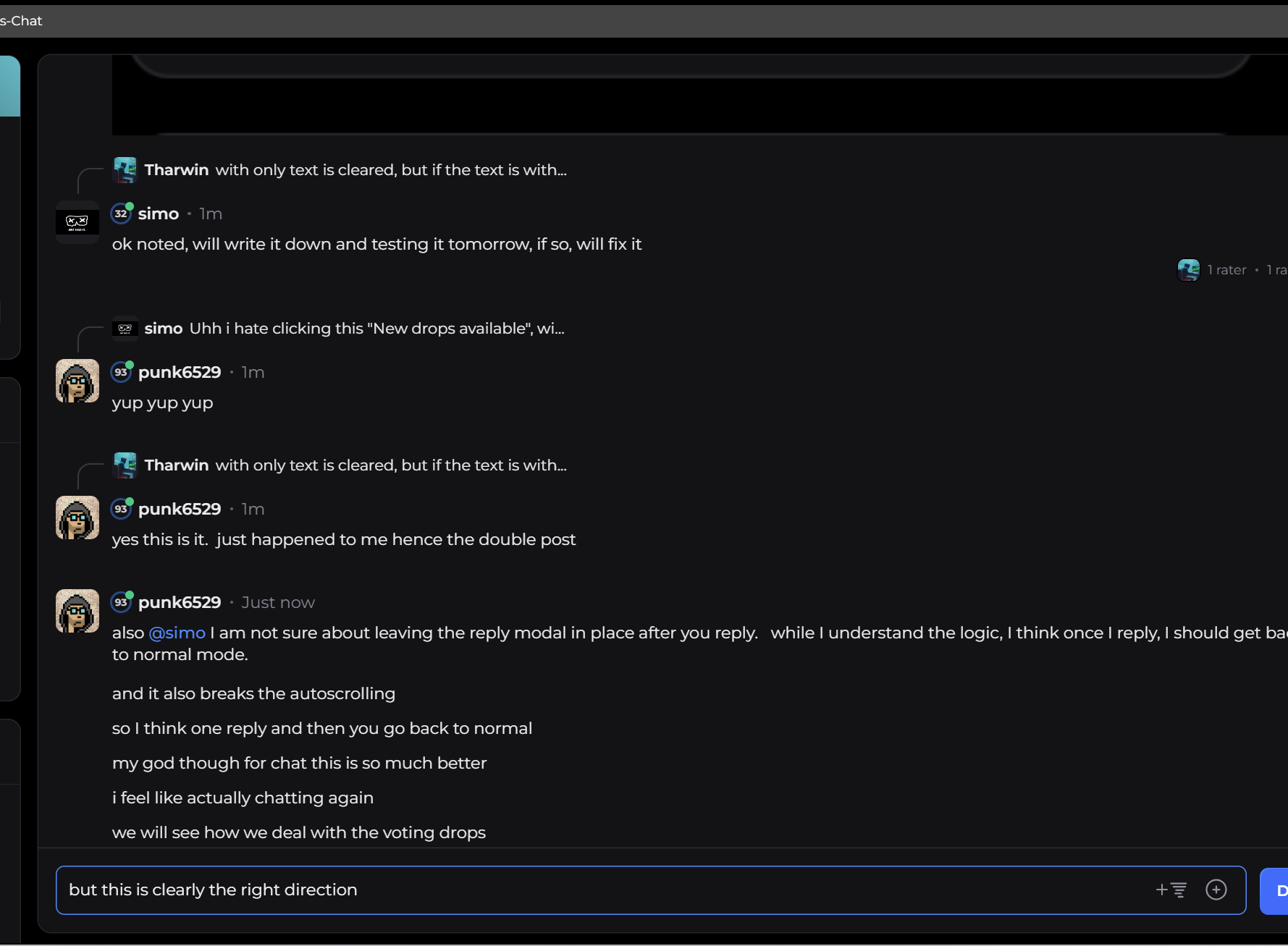
but this is clearly the right direction
we will see how we deal with the voting drops
i feel like actually chatting again
my god though for chat this is so much better
so I think one reply and then you go back to normal
also @[simo] I am not sure about leaving the reply modal in place after you reply. while I understand the logic, I think once I reply, I should get back to normal mode.
and it also breaks the autoscrolling
@[simo] I know are are going to change the pinning approach but until the I think the pin can move up a level to not be squished?
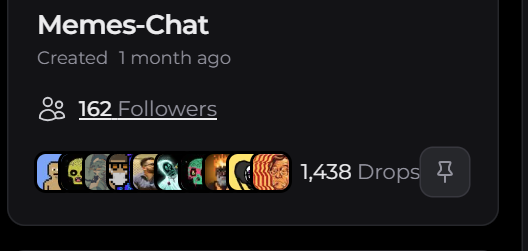
@[simo] I know are are going to change the pinning approach but until the I think the pin can move up a level to not be squished?

will revert!
i need to switch locations
but the basic shift to this interface is awesome
we have lots of other things to do / improve around this
great work @[simo]
hello world
YOLOing on naming today, but I think I am right :)
my two work modes are:
- working hard
- working ultra hard
last few weeks have been back to ultra-hard with no end in sight
AI brings great challenges and opportunities
gmeme lfg
https://x.com/tsarnick/status/1837610136325836893
gmeme
@[arsonic]
when sgt pepe statue like this
https://x.com/Rainmaker1973/status/1837303232546082957
**What Has 6529 Seen**
(in the last week)
Two public things and one private thing
**Public**
1. o1-preview is superb at coding, basically human level or better in some ways, in most situations, with right context. It is a big step up from Claude 3.5 Sonnet. But see point #4.
2. My whole coding arc was so that I could use the models in real-time and get my own personal view at how good they are at coding.
**Private**
3. Friend on mine went on a high-level corporate field trip to West Coast tech giants and universities. Came back shocked and talking like me. I was not shocked with what he saw but it was further confirmation that I am right.
4. o1-preview is basically GPT-4 training set with 30-120 seconds worth of inference in it. It is safe to assume that OpenAI is sitting on:
a) o1-preview with hours/days/weeks of inference
b) GPT-5
c) GPT-5 with hours/days/weeks of inference
No way some version of that is not, effectively, AGI. Now the bar will keep moving on "what is AGI" until it is "the LLM has to be doing Nobel-worthy work on every prompt" but ok, come on, 4a to 4c above are going to outperform 99% of humans on most intellectual tasks
And more relevantly they will feed into the next models. Oh, also quantum computing is about to hit maturity.
The next few years will have a very steep technological take-off (we all knew this) but the important point is that you can assume it has already happened. It might not be available to you in a web app but it is there, it is in the labs, it is available to them.
So the AI take-off is happening, shortly behind quantum, biotech, robotics, material science.
All the implications of this as we have discussed. All the implications for crypto as we have discussed.
We need to hustle. We need to get the protocol out. I am not just cheering from the stands now. The cleats are back on. We got to hustle.
**General Update**
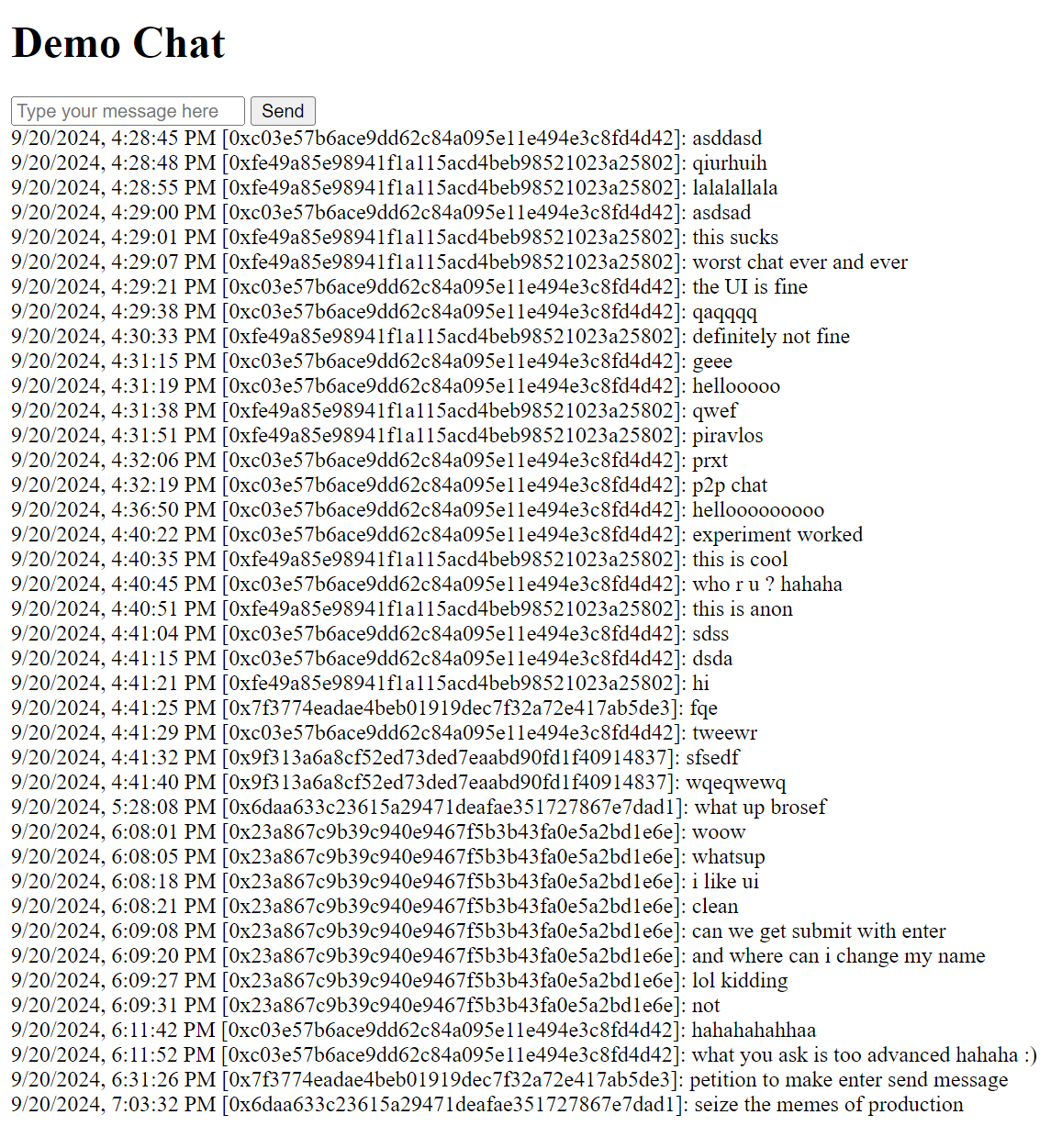
1. **Peer to Peer**: We got peer to peer messaging to work today. We still have work to do but this topic is the only outstanding topic I had / have any questions about our proposed architecture (in terms of the technical underpinnings of how the cores will talk to each other).
So today was a big step forward. Wright Brothers etc
2. **New Chat Format**
We are using it on staging. It is better for chat, more Discord-like, less Twitter-like.
This has been interesting because initially we fully deprioritized chat (it was just replies to drops) but it looks like we need to have full-blown chat and also the voteable drops that will have to work a bit differently.
I stand by earlier this week timelines that we will have a significantly upgraded chat next week and can start working on voting the week after that
3. **Overall**
It has been a very good week tech-wise, we are making incredible progress.
What needs some work and thinking is how we can prepare (the royal "we" including you all) the onboarding strategy.
It is not imminent, but it is also not so far away now. We need to start planning.
**Core 0.07**
This is an important update for two reasons:
1) You can make a wallet in core itself. You should treat this like a hot wallet, a social wallet, like Metamask but this opens the door to immediate "download and get active" for people who do not have economic value in their wallet.
They can be active immediately on Seize even if they do not have a wallet at all before downloading
Then we need to guide them later to a HW or SAFE and they can consolidate their hot wallet
2) There is a network tab that does not exist on web that will start hosting all the local activities
What I am saying is that this is the first divergence of the desktop app from web and it is going to accelerate from here. First steps on the pathway to the last parts of decentralization
https://seize.io/waves/a871e152-5567-4407-80cc-382b475bee1a?drop=bb551038-70e2-4cd5-b9d0-7e4ee6ccdeee
Genesis Moment
in fact, you only know the door is there and unlockable if you have relevant TDH
**GPT Version**
I had a GPT discussion about the topic for for a little bit earlier today and we came up with the following draft architecture.
I am zero % wedded to this approach. Ideally we would have someone in community that have some experience with these topics.
In any case, I put it out there as a starting point for discussion.
## Introduction
We are embarking on an exciting project that merges blockchain technology with physical access control systems. The goal is to design and implement a smart lock or access control mechanism that grants access based on a user's Total Days Held (TDH) of specific Ethereum NFTs. This document outlines the challenge, presents a proposed architecture based on our research, and invites collaboration and alternative ideas to bring this innovative solution to life.
## Background
### Ethereum NFTs and TDH
1. **Ethereum NFTs (Non-Fungible Tokens):**
- Unique digital assets stored on the Ethereum blockchain.
- Represent ownership of digital or physical items, art, collectibles, etc.
2. **Total Days Held (TDH):**
- A metric agreed upon by a specific NFT community.
- Represents the cumulative number of days a wallet address has held one or more NFTs from a particular collection.
- For example, if a user holds one NFT for 10 days, their TDH is 10; if they hold two NFTs for 10 days, their TDH is 20.
### TDH Oracle
- A community-built oracle provides TDH values for Ethereum addresses.
- Accessible via an on-chain smart contract or API.
- Returns a numeric value indicating the TDH (e.g., 10, 1000, 100000).
## Goal
Develop an access control system that:
- **Authenticates Users Based on TDH:**
- Grants access to individuals who prove they have a TDH above a specified threshold.
- **Validates On-Chain Data:**
- Interacts with the Ethereum blockchain in real-time to verify TDH values.
- **Ensures Security and Reliability:**
- Implements robust security measures to protect against unauthorized access.
- **Is Practical and Implementable:**
- Can be developed and deployed within a reasonable timeframe (e.g., one month).
## Proposed Architecture
Based on extensive research, the following architecture is proposed:
### Overview
1. **Customizable NFC Reader for User Interaction**
2. **Central Server for Authentication and Blockchain Interaction**
3. **Standardized Lock Control Mechanism**
### Detailed Components
#### 1. Customizable NFC Reader
- **Device Choice:** ELATEC TWN4 MultiTech series.
- **Functionality:**
- Reads data from users' smartphones via NFC.
- Captures a cryptographic signature generated by the user's Ethereum wallet.
- **Customization:**
- Programmable firmware to handle custom data formats.
- Supports multiple RFID/NFC technologies and can interface with Android and iOS devices.
#### 2. Central Server
- **Primary Roles:**
- **Authentication Logic:**
- Verifies cryptographic signatures to confirm ownership of the Ethereum address.
- Ensures the signature corresponds to the challenge presented.
- **Blockchain Interaction:**
- Connects to the Ethereum network to query the TDH oracle.
- Retrieves the TDH value for the authenticated Ethereum address.
- **Access Decision:**
- Compares TDH value against predefined thresholds.
- Decides whether to grant or deny access based on policies.
- **Security Measures:**
- Implements secure communication protocols (e.g., HTTPS with SSL/TLS).
- Includes authentication mechanisms for devices communicating with the server.
#### 3. Standardized Lock Control
- **Hardware Choice:** Commercial access controllers compatible with standard protocols (e.g., OSDP, Ethernet).
- Examples include HID Global Edge EVO, Axis A1001 Network Door Controller.
- **Functionality:**
- Receives commands from the central server to lock or unlock doors.
- Controls physical locking mechanisms (e.g., electric strikes, magnetic locks).
- **Advantages:**
- Reliable and compliant with safety regulations.
- Easier maintenance and support from established manufacturers.
## System Workflow
1. **User Initiates Access Attempt:**
- Approaches the door and taps their smartphone on the NFC reader.
- The NFC reader generates a cryptographic challenge (e.g., a random nonce).
2. **User Authenticates Challenge:**
- The user's Ethereum wallet app signs the challenge using their private key.
- The signed message is sent back to the NFC reader via NFC.
3. **Data Transmission to Server:**
- The NFC reader transmits the signed message and public Ethereum address to the central server over a secure connection.
4. **Server Authentication and Verification:**
- **Signature Verification:**
- Confirms the signature is valid and corresponds to the provided Ethereum address.
- **TDH Retrieval:**
- Queries the TDH oracle smart contract using the Ethereum address.
- Retrieves the current TDH value.
- **Access Decision:**
- Compares the TDH value against the required threshold for that door.
- Logs the attempt and decision for auditing purposes.
5. **Door Unlocking:**
- If access is granted, the server sends a command to the lock controller to unlock the door.
- The lock controller actuates the physical locking mechanism.
- The door remains unlocked for a predefined duration or until it is closed again.
6. **User Notification (Optional):**
- The system can provide feedback to the user via the smartphone app or display (e.g., access granted or denied).
## Advantages of This Approach
- **Flexibility and Scalability:**
- Centralized server allows easy updates to authentication rules and thresholds.
- Supports multiple doors and access points within the same system.
- **Security:**
- Utilizes strong cryptographic methods for authentication.
- Reduces reliance on physical tokens that can be lost or duplicated.
- **User Experience:**
- Seamless interaction using smartphones.
- No need for additional physical credentials.
- **Compliance and Reliability:**
- Standardized locks ensure compliance with safety codes.
- Commercial hardware offers reliability and manufacturer support.
## Implementation Steps
### 1. Prototype Development
- **Acquire Hardware:**
- ELATEC TWN4 NFC reader.
- Choose standardized lock controllers compatible with the system.
- **Software Setup:**
- Set up a development environment for customizing the NFC reader firmware.
- Configure the central server with necessary software libraries for Ethereum interaction.
### 2. Customizing the NFC Reader
- **Firmware Development:**
- Use ELATEC's SDK and AppBlaster tool to program the reader.
- Implement functionality to:
- Generate and present cryptographic challenges.
- Receive and transmit signed messages.
- **Testing:**
- Validate communication between the NFC reader and smartphones.
- Ensure compatibility with popular Ethereum wallet apps.
### 3. Developing Server-Side Logic
- **Authentication Module:**
- Implement signature verification using Ethereum cryptographic libraries.
- **Blockchain Interface:**
- Connect to the Ethereum network via a provider (e.g., Infura, Alchemy).
- Access the TDH oracle smart contract to retrieve TDH values.
- **Access Control Logic:**
- Define thresholds and policies for granting access.
- Implement logging and auditing functionality.
### 4. Integrating Lock Controllers
- **Communication Setup:**
- Establish secure communication channels between the server and lock controllers.
- **Command Implementation:**
- Use APIs or protocols provided by the controller manufacturer to send lock/unlock commands.
- **Testing and Validation:**
- Ensure commands result in the correct operation of locks.
- Test fail-safes and emergency overrides.
### 5. Security and Compliance Review
- **Security Measures:**
- Conduct penetration testing and security audits.
- Implement encryption and authentication for all communication channels.
- **Safety Compliance:**
- Verify that the physical installation meets building codes and safety regulations.
### 6. Deployment and User Training
- **Installation:**
- Install readers and controllers at the access points.
- Set up network infrastructure with hardline Ethernet connections where possible.
- **User Onboarding:**
- Provide instructions for users on how to use their smartphones to gain access.
- Offer support for setting up wallet apps if necessary.
## Open Invitation for Ideas
While the proposed architecture is comprehensive, we recognize the value of collaborative input and innovation. We invite you to contribute by considering:
- **Alternative Authentication Mechanisms:**
- Is there a more efficient or secure method to verify users based on TDH?
- **Hardware Alternatives:**
- Are there other devices or components that could enhance the system's performance or reduce costs?
- **System Enhancements:**
- What additional features or improvements can be made to increase usability, security, or scalability?
- **Potential Challenges:**
- Identifying and addressing potential weaknesses or failure points in the proposed system.
Your expertise and creativity are invaluable as we refine and develop this solution. We encourage open discussion and the sharing of ideas to overcome challenges and achieve the project's goals.
## Conclusion
The TDH Lock Challenge seeks to pioneer a novel integration of blockchain technology with physical access control. By leveraging the TDH metric and Ethereum's capabilities, we aim to create a secure, flexible, and user-friendly access system.
This project not only enhances security but also demonstrates the potential for blockchain applications in everyday physical systems. We are excited about the possibilities and look forward to collaborating with you to bring this vision to fruition.
**Note:** This document is intended to provide a clear overview of the TDH Lock Challenge and the proposed solution. It is a starting point for discussion and collaboration. Your feedback, ideas, and contributions are highly appreciated.